

Campus Locations
Burnaby
3700 Willingdon Avenue
Burnaby, BC
V6G 3H2
604-434-5734
Downtown
555 Seymour St
Vancouver, BC
V6B 3H6
604-434-5734
Marine
265 West Esplanade
North Vancouver, BC
V7M 1A5
604-453-4100
Annacis Island
1608 Cliveden Avenue
Delta, BC
V3M 6M2
604-434-5734
Aerospace Technology
3800 Cessna Drive
Richmond, BC
V7B 0A1
604-419-3744
Applied Research at BCIT
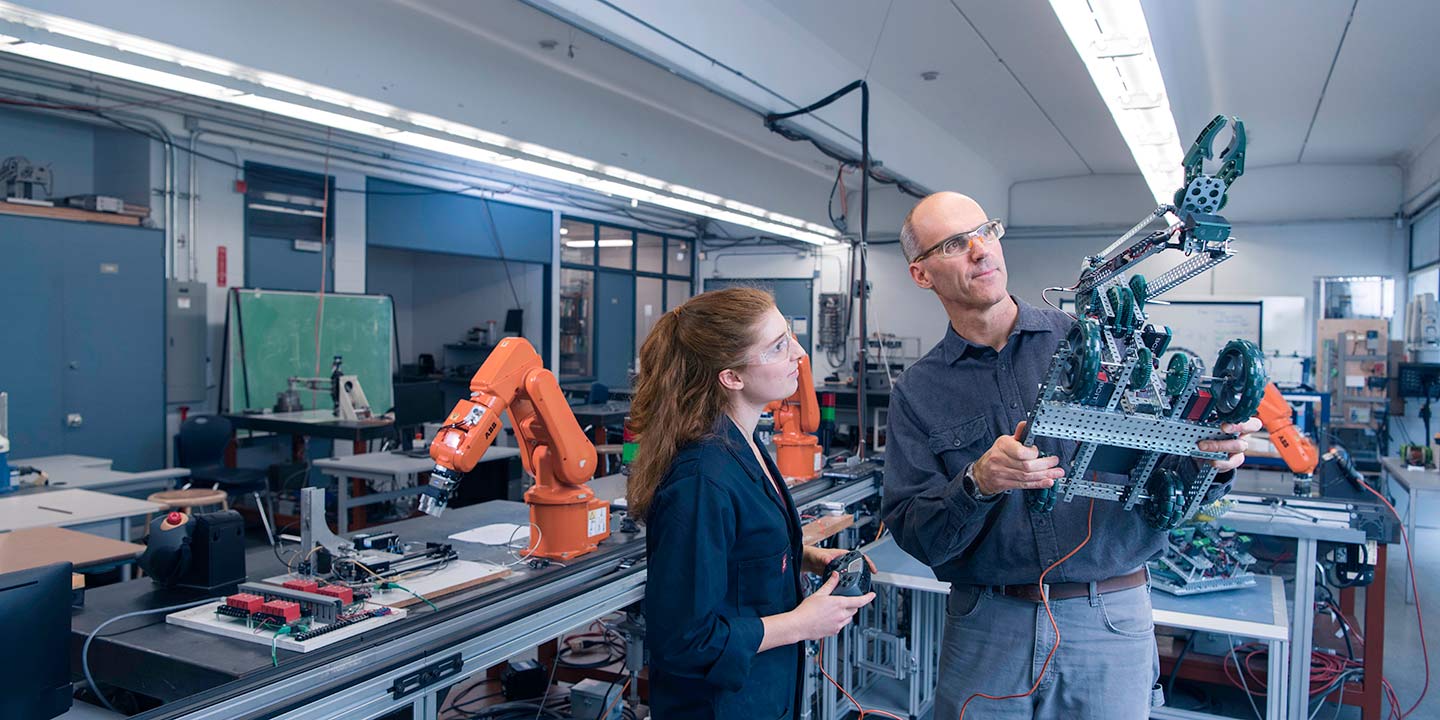
BCIT has been working with industry clients for more than 25 years, helping companies and organizations develop new technologies, products and services. Research projects conducted at BCIT typically involve:
- Design and development of prototype devices, systems and applications
- Analysis, testing and evaluation of new technologies
- Commercialization and licensing of new technologies and products
BCIT has 54,000 sq. ft. of space available for applied research, drawing on full-time research staff and faculty from more than 200 technical programs to assemble teams with multi-disciplinary skills and expertise. Clients range from the independent entrepreneur with a unique prototype idea to established companies and organizations developing new products and services.
BCIT is home to a number of specialized research centres, including:
Connect with BCIT’s Applied Research Liaison Office
Teck Copper Innovation Hub
As new technologies and additive manufacturing drive emerging healthcare devices, the British Columbia Institute of Technology established the Teck Copper Innovation Hub to stay abreast of these changes. Funded by a $1.75 million donation from Teck Resources Limited and located inside BCIT’s Centre for Applied Research and Innovation, this facility will enable researchers and students to use copper’s antimicrobial properties to enhance health and safety in real-life applications. The hub includes specialized 3D printing systems, engineering services and training, enhancing student learning and enabling the BCIT community to engage in prototyping.
Using drones and AI in the battle against wildfire
As wildfires become an increasing threat, BCIT researchers are demonstrating how Remotely Piloted Aircraft Systems (RPAS), or drones, and AI-powered computer vision can strengthen wildfire prevention, monitoring and forest management. Through the RPAS Hub, this work highlights the potential to shift resources from costly post-wildfire response toward proactive prevention, with researchers suggesting that dedicating just 10% of Canada’s approximately $400 million annual post-wildfire budget to prevention could help prevent 30–40% of wildfires. This research makes a compelling case for greater investment in RPAS technology, prevention-focused strategies, and innovation that can protect communities, forests and public resources.
To learn how polytechnics are leading sustainable change, check out our publication.